Key takeaways
- High blood pressure can damage kidney blood vessels over time, while kidney disease can contribute to higher blood pressure.
- Repeated readings, kidney function, urine albumin, medicines, symptoms, and other health conditions help shape the plan.
- Blood pressure goals and medicine decisions should be individualized by a qualified clinician.
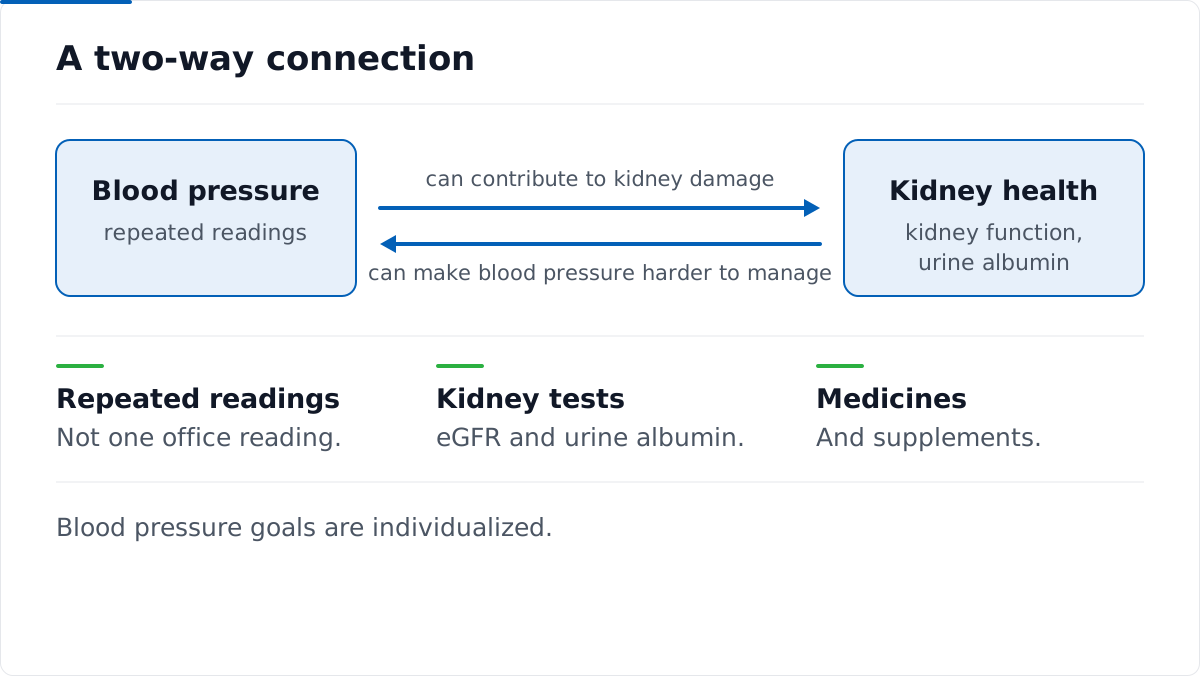
How blood pressure and kidney health are connected
High blood pressure and kidney disease can affect each other. Over time, high pressure in blood vessels can contribute to kidney damage. At the same time, kidneys help regulate fluid and signals involved in blood pressure, so kidney disease can make blood pressure more difficult to manage.[1]
This two-way connection is one reason clinicians may review blood pressure readings alongside creatinine, eGFR, urine albumin, medicines, diabetes, heart health, and other conditions. One office reading or one kidney test may not show the full pattern.
Why repeated readings and kidney tests matter
High blood pressure is common among adults with CKD and is also a risk factor for kidney disease.[2] Readings can vary with activity, discomfort, stress, illness, measurement technique, and timing. If your clinician recommends home monitoring, ask how to use the device, when to measure, and how to share the record.
Urine albumin can add information about kidney damage and risk. eGFR and creatinine trends help describe kidney filtering. Looking at these findings together can help the care team explain why monitoring or treatment may change.
-
Bring a complete list of prescriptions, over-the-counter products, and supplements.
-
Share home readings if your clinician has asked you to collect them.
-
Ask whether the cuff fits and whether your measurement technique is reliable.
-
Ask what symptoms or reading changes should lead to an earlier call.
Blood pressure goals are individualized
Clinical guidelines discuss blood pressure management in CKD, but applying guidance requires judgment about measurement method, age, symptoms, other illnesses, pregnancy when relevant, medicine tolerance, and patient priorities.[3] There is not one online number that should be used as a personal target for every patient.
Medicine selection also depends on the clinical picture. Do not choose, change, or combine blood pressure medicines based on a general article. Ask your prescribing clinician how each medicine fits the kidney plan and whether follow-up labs are needed.
Preparing for a focused visit
Write down when readings were taken and any symptoms present at the time. Bring your monitor if the office asks you to compare it with clinic equipment. Ask what the kidney tests show, what goal fits your circumstances, and how the team will judge whether the plan is working.
The Kidney Experts supports patients in Jackson, Dyersburg, Union City, Covington, and nearby West Tennessee communities. Learn about hypertension management, review kidney clinic locations, or read how urine albumin may fit the picture.
This article is educational information only. It does not select a blood pressure goal or medicine and does not replace individualized medical advice from your clinician or nephrology team.
Questions to ask your care team
- How should I record home blood pressure readings for my next visit?
- What do my kidney function and urine albumin results add to the blood pressure discussion?
- What goal is appropriate for me, and what factors shaped it?
- Could any prescription, over-the-counter product, or supplement affect my readings or kidneys?
- Which symptoms or changes should prompt me to contact the office sooner?