Key takeaways
- CKD management may lower risk or slow progression, but no plan can promise a specific outcome.
- Monitoring kidney and urine results helps clinicians adjust care as risks and health needs change.
- Blood pressure and glucose care when applicable, prescribed treatment, activity, smoking avoidance, dietitian input, and medicine review may all contribute.
What “slowing progression” means
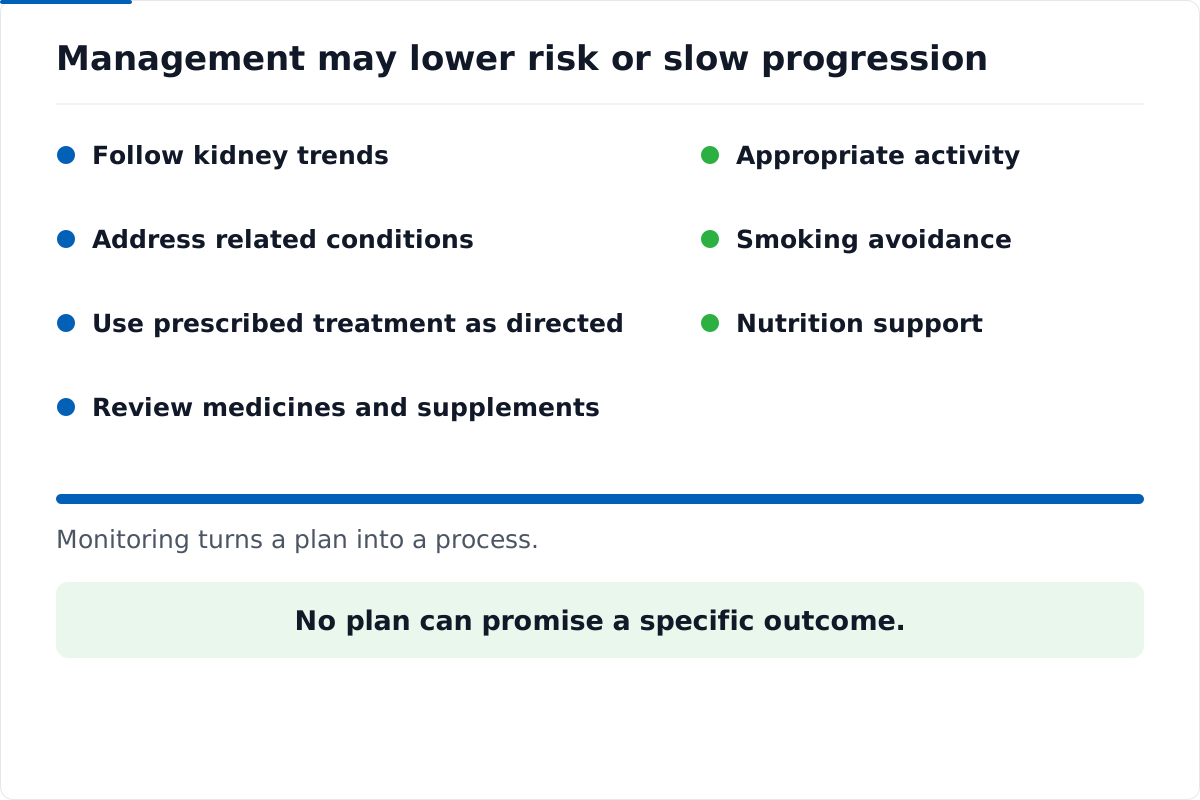
Chronic kidney disease often changes over time, but the direction and pace differ from person to person. Management may lower risk or slow progression. It cannot guarantee that kidney function will follow a particular path, so clinicians use repeated blood and urine results to understand what is happening.[1]
The plan may address several connected risks instead of relying on one action. Your CKD stage, urine albumin, cause of kidney disease, blood pressure, diabetes when present, heart health, medicines, symptoms, and priorities can all shape care.
Parts of an individualized CKD plan
NIDDK patient guidance and KDIGO clinical guidance describe a broad approach that includes monitoring and management of relevant health risks.[2] Which parts apply, and how they are used, should be decided with qualified clinicians.
-
Follow kidney trends. Creatinine, eGFR, urine albumin, and other tests can help the care team assess risk and response over time.
-
Address related conditions. Blood pressure and glucose management can matter when those conditions are present. Personal goals require clinical judgment.
-
Use prescribed treatment as directed. Eligibility, benefits, risks, and follow-up differ across patients. Ask what each treatment is intended to do and what monitoring it requires.
-
Review medicines and supplements. Prescription, over-the-counter, and herbal products belong on the same list so clinicians and pharmacists can look for kidney-related concerns.
-
Support daily health. Appropriate activity, smoking avoidance, sleep, and nutrition support may contribute to the wider plan. A kidney dietitian can help when food guidance needs to reflect labs and treatment.
Monitoring turns a plan into a process
Follow-up is not only a repeat of the same advice. New lab trends, side effects, illness, hospitalization, or changes in access and priorities can lead the team to adjust the plan. Ask how often monitoring may be needed, which results matter most, and how you will know when to call before the next scheduled visit.
If a recommendation is difficult to follow, say so. Cost, transportation, work, food access, side effects, and caregiving responsibilities are relevant clinical context. A practical plan should account for barriers rather than assuming that every patient has the same resources.
Questions to bring to the visit
Ask what is known about the cause of CKD, what your eGFR and urine albumin trends show, and which risk is the current priority. Ask whether nutrition support, hypertension care, or another service is relevant. Do not assume that a medicine discussed online is suitable for you; universal drug eligibility cannot be determined from a general article.
The Kidney Experts provides kidney care in Jackson, Dyersburg, Union City, Covington, and nearby West Tennessee communities. Review CKD stages, explore chronic kidney disease care, or find a clinic location.
Contact your clinician before the next scheduled visit if symptoms change, an illness affects eating, drinking, or medicines, or the care plan becomes difficult to follow. Use established urgent-care instructions for concerns that cannot wait.
This article is educational information only. It does not promise an outcome, determine treatment eligibility, diagnose kidney disease, or replace individualized medical advice from your clinician or nephrology team.
Questions to ask your care team
- What do my eGFR and urine albumin trends show about current risk?
- Which health condition or care priority matters most for my kidney plan now?
- How will we monitor whether the prescribed plan is helping?
- Would nutrition support or help with smoking cessation be useful for me?
- Which prescriptions, over-the-counter products, and supplements should be reviewed?