Key takeaways
- There is no single food plan that fits every person with chronic kidney disease.
- Potassium, phosphorus, protein, sodium, and fluid questions should be interpreted with current labs, treatment, and nutrition needs.
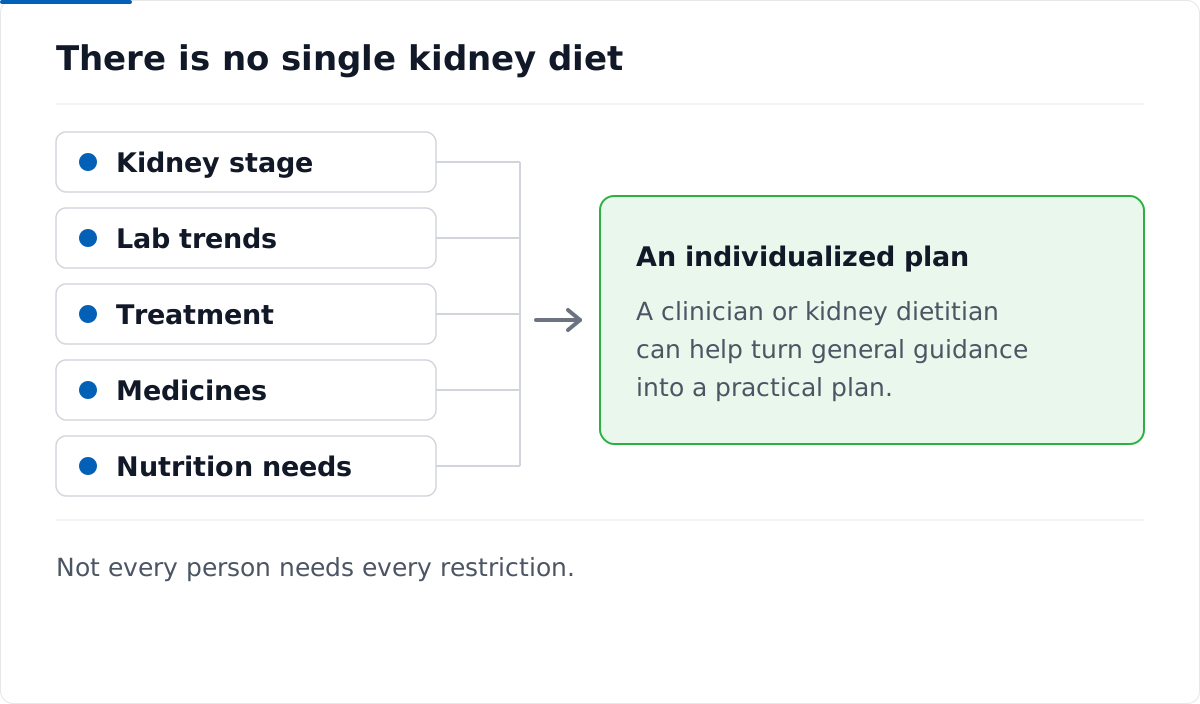
- A clinician or kidney dietitian can help turn general guidance into a practical, individualized plan.
The short answer about a “kidney diet”
There is no single kidney diet that everyone with chronic kidney disease should follow. Nutrition guidance can vary with CKD stage, blood and urine results, treatment, medicines, diabetes or heart conditions, appetite, body weight, and the risk of poor nutrition.[1]
That means a food that fits one person’s plan may not fit another person’s plan in the same way. General internet lists cannot see your lab trends or know whether a restriction could leave you without enough nourishment. Ask your clinician or a registered dietitian with kidney experience what deserves attention in your situation.
Why plans differ from person to person
CKD care looks at the full clinical picture. Guidance may change as kidney function, urine albumin, medicines, treatment, and other conditions change. KDIGO guidance supports individualized care that considers risks, preferences, and the person’s overall health rather than treating CKD as one identical experience.[2]
Nutrition conversations may include food quality, sodium, protein, potassium, phosphorus, fluid, diabetes needs, and heart health. Not every person needs every restriction. Making several restrictions at once without clinical guidance can create confusion and may make it harder to eat enough.
-
Bring recent lab results and a complete medicine list to the conversation.
-
Describe what you usually eat without judging it as “good” or “bad.”
-
Mention appetite changes, unplanned weight changes, nausea, or trouble getting food.
-
Ask which one or two priorities are most relevant now and how progress will be reviewed.
Potassium is a good example of individual variation
Potassium is needed by the body, but kidney disease and some medicines can affect blood potassium. A person’s food plan should reflect current lab results and clinical context.[3] A universal list of foods to avoid can be misleading because portions, preparation, overall eating patterns, and the reason for an abnormal result may matter.
Do not assume that all fruits and vegetables are off limits, and do not assume that a food labeled “healthy” fits every kidney situation. Ask whether your potassium results have been high, low, or stable and whether any medicine or supplement needs clinician review.
Building a practical conversation
A useful plan should fit real life. Tell the care team about cultural foods, grocery access, cooking arrangements, work schedules, swallowing or dental concerns, and other conditions that affect eating. A dietitian can help translate clinical priorities into choices that are realistic and nutritionally adequate.
People in Jackson, Dyersburg, Union City, Covington, and surrounding West Tennessee communities can use the patient resources and clinic directory to prepare for a visit. Related education on CKD stages can help explain why recommendations may change over time.
Contact your care team if eating becomes difficult, appetite or weight changes unexpectedly, or symptoms are worsening. Use your clinician’s urgent-care instructions for concerns that cannot wait.
This article is educational information only. It does not prescribe a diet, diagnose kidney disease, or replace individualized medical advice from your clinician or kidney dietitian.
Questions to ask your care team
- Which parts of my current eating pattern matter most for my kidney and heart health?
- Do my recent labs suggest that I need to discuss potassium or phosphorus?
- How do my CKD stage, medicines, diabetes, or treatment affect nutrition advice?
- Would a referral to a registered dietitian with kidney experience help?
- What changes should I avoid making without reviewing my labs first?