Key takeaways
- Expect a review of why you were referred, your history, symptoms, medicines and blood pressure, and possibly a physical exam.
- A blood test gives eGFR, an estimate of how well the kidneys filter; a urine test checks for albumin, a sign of kidney damage. They answer different questions.
- Imaging such as a kidney ultrasound is added only when it answers a specific question, and our routine guidance is that regular clothes are fine.
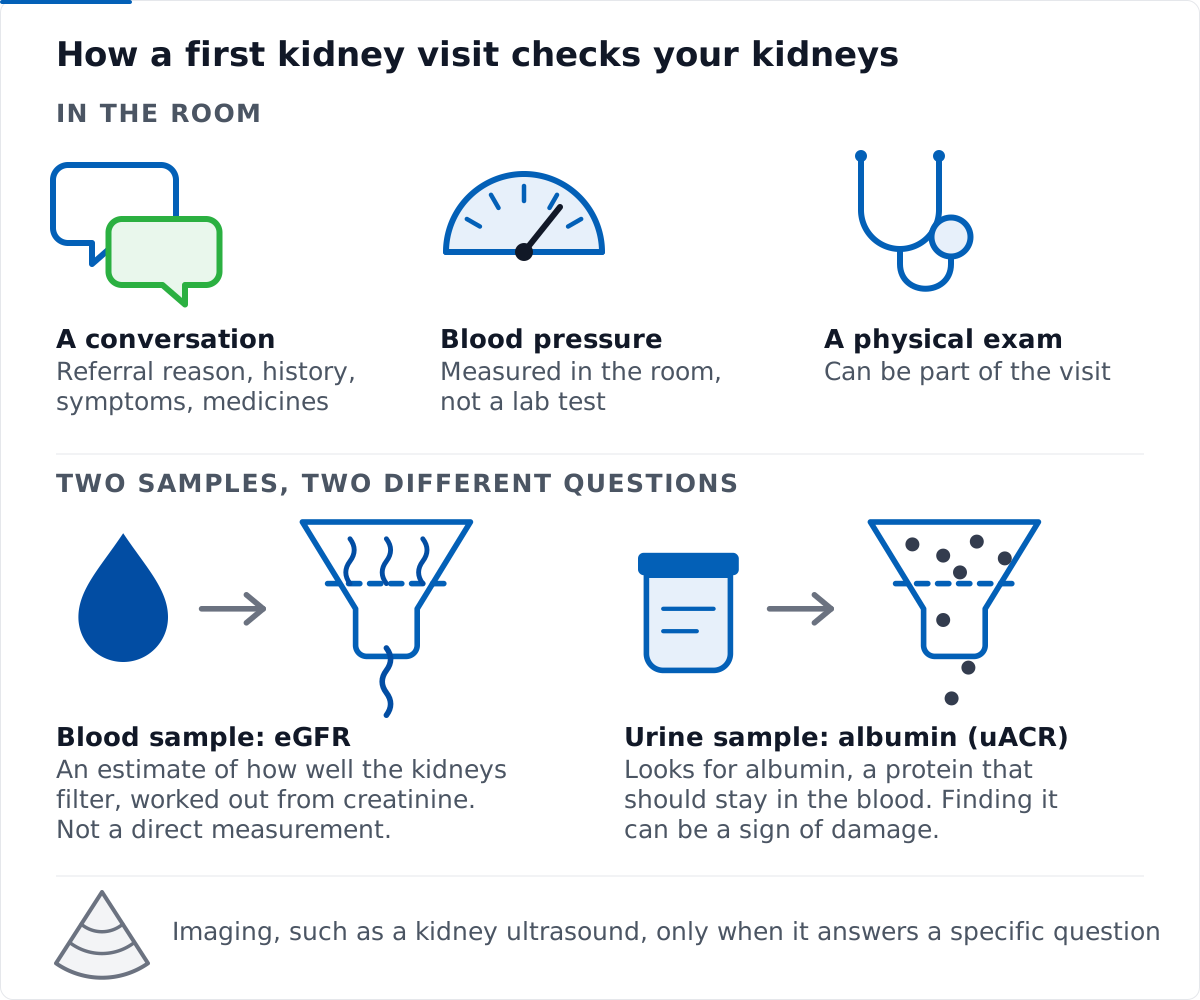
At a first nephrologist appointment, the clinician usually reviews the reason for your referral, your health history and symptoms, your medicines, and your blood pressure. They may examine you, and they review the blood and urine tests you already have or order the ones that are missing. Imaging, such as a kidney ultrasound, is added when it answers a specific question about you. Our routine guidance for a first visit is that regular clothes are fine.
What the clinician reviews with you
The visit starts with a conversation. Expect questions about why you were referred, what symptoms you have noticed, other conditions such as diabetes or high blood pressure, and kidney problems in your family. Bring a complete list of your medicines and supplements, including anything you buy without a prescription, so your clinician can review your care.[1] If you have questions about a medicine, ask your clinician rather than changing it on your own.
The blood test: eGFR estimates filtering
The main kidney blood test measures creatinine, a waste product the kidneys clear. From that number, your age and sex, the lab calculates an estimated glomerular filtration rate, or eGFR. The word estimated matters: eGFR is an estimate of how well the kidneys filter, not a direct measurement of the kidneys themselves.[2] Your clinician reads it alongside your other results and, where possible, earlier results, because the trend often says more than one value. What eGFR may mean explains the number in more detail.
The urine test: a different question
A urine test asks something different. It checks for albumin, a protein that healthy kidneys normally keep in the blood, which is a different question from how well they filter; albumin in the urine can be a sign of kidney damage even when eGFR looks reasonable. The usual test is the urine albumin-to-creatinine ratio, or uACR, from a small sample. An abnormal urine result may need to be repeated to confirm it, since values can vary from day to day. NIDDK explains how urine albumin testing helps assess kidney damage. Read more in what protein in urine can mean.
Blood pressure and a physical exam
Blood pressure is checked in the room. It is not a lab test, but it matters to the kidneys and is a standard part of the assessment. A physical exam can be part of the visit too. What the clinician examines, and whether an exam is needed on the day, depends on your history and results.
When imaging is added
An ultrasound of the kidneys, or other imaging, is ordered when it would answer a specific question, such as the size or shape of the kidneys or whether urine is draining freely.[3] Not everyone needs imaging. If imaging is suggested, ask what question it is meant to answer.
Will blood be drawn or a urine sample needed?
If your referring clinician already sent results, the visit can start from those, and any missing tests are ordered from the visit. Whether a sample is collected on the day, and how soon results are back, depends on what you already have and what your clinician wants to check. If timing matters to you, ask when you book.
What to wear and how privacy is handled
Our routine guidance is that regular clothes are fine for a first visit; a sleeve that rolls up makes the blood pressure check easier. If your clinician needs to examine an area that is covered, they will explain what they are looking for first and protect your privacy. If anything about an exam concerns you, say so. Guidance for patients also suggests asking, before the visit, what to expect and how to prepare.[4]
What happens next
Before you leave, make sure you know the plan: which results to repeat or confirm, whether any imaging is needed, any medicine changes, and when to come back. Bringing recent results and a medicine list helps that plan start sooner; how to prepare for your first nephrology visit lists what is worth gathering.
Booking a first visit in West Tennessee
The Kidney Experts sees new patients in Jackson, Dyersburg, Union City and Covington. To schedule a visit or a referral, call our main line at (731) 300-6155; you can also request an appointment online or start a referral yourself.
This article is educational information only. It does not diagnose kidney disease and does not replace individualized medical advice from your clinician or nephrology team.
Questions to ask your care team
- Which of my results tell you the most about my kidneys right now?
- Do you plan to examine me today, and what will you be looking for?
- Are there tests you want to repeat or confirm, and why?
- What would make you want an ultrasound or other imaging?
- What should I watch for before the next visit?