Key takeaways
- Early chronic kidney disease may not cause noticeable symptoms, which is why an assessment cannot rely only on how you feel.
- A symptom on its own does not establish chronic kidney disease, and an online checklist cannot determine its cause.
- The blood test (eGFR) and the urine albumin test are complementary pieces of an assessment.
- The word “chronic” describes a condition over time, not simply an abnormal flag on today's report.
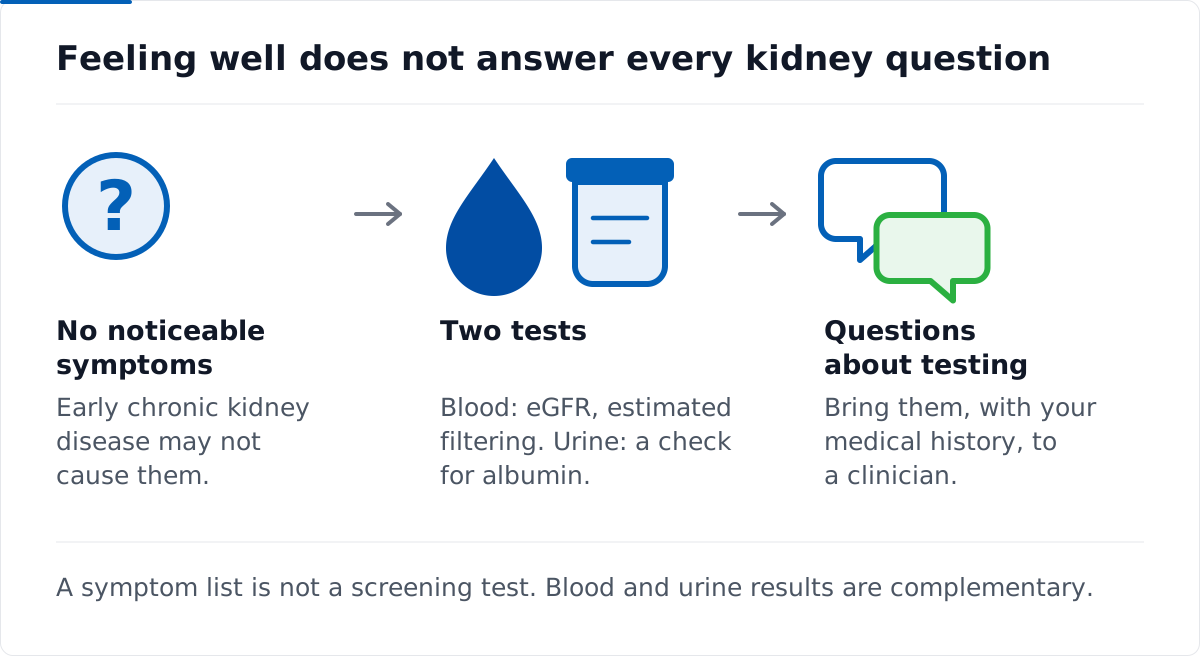
Feeling well does not answer every kidney question
People often look for a symptom that will tell them whether their kidneys are healthy. Early chronic kidney disease may not cause noticeable symptoms, which is why an assessment cannot rely only on how you feel. The NIDDK tests and diagnosis overview emphasizes testing to check kidney health.[1] Waiting for a distinctive sensation is not the same as having information about filtering or albumin in the urine.
That message should not turn every ordinary symptom into a kidney warning. A symptom on its own does not establish chronic kidney disease, and an online checklist cannot determine its cause. If a change in your health concerns you, describe it to a clinician rather than deciding that it must be a kidney problem. The useful next step is an assessment of your situation, not a diagnosis based on a search result.
Why a symptom list can be misleading
An article promising a fixed number of “early signs” can make kidney disease sound easier to recognize than it is. It may also imply that a person without those signs has nothing to discuss with a clinician. Neither conclusion follows from the absence or presence of an item on a list. This article therefore does not rank symptoms, estimate their frequency, or present them as a screening test.
Your account of how you feel still matters. Explain what has changed, when it started, and what prompted you to ask about kidney health. That information helps the clinician understand the question. It does not replace laboratory information, and it should not be dismissed merely because there is no obvious connection between a symptom and the kidneys.
What the usual kidney tests are looking for
The NIDDK overview describes a blood test used to estimate glomerular filtration rate, or eGFR, and a urine test that checks for albumin. The blood result helps describe estimated filtering. The urine result provides a different kind of information about a protein that normally belongs in the blood. These are complementary pieces of an assessment rather than competing ways to assign yourself a diagnosis.
Ask your clinician to explain both the result and its context. A laboratory report can contain a number, a unit and a reference range without explaining what that finding means for you. If the explanation focuses on only one test, it is reasonable to ask whether other information is available or still needed. This article does not specify a testing schedule or a package everyone should request; those decisions depend on an individualized assessment.
One result and a long-term diagnosis are different things
The word “chronic” describes a condition over time, not simply an abnormal flag on today’s report.[2] A clinician may need earlier results or further evaluation to understand whether a finding persists and what it represents. If you have previous laboratory reports, make their dates available. If you do not, say so rather than assuming the current result has always been the same.
Ask what the team can conclude now and what remains uncertain. You can also ask who will explain any follow-up result and how to get clarification if you do not hear back. This helps keep an unfinished assessment from being mistaken for a confirmed diagnosis or an all-clear message.
Use information to prepare, not to self-treat
Bring questions about testing, your medical history and the next step. This article gives no instructions to start or stop medicine, follow a special diet, or change fluid intake. Those decisions should not be made from a general symptom article. No symptom pattern or test result described here promises that a particular outcome can be prevented.
For practice context, visit our CKD service page or when-to-see-a-nephrologist article. Contact the practice for appointment coordination. Educational information does not replace personal assessment, and a routine website inquiry is not an emergency care pathway.
Questions to ask your care team
- Can you explain both the result and its context?
- Is other information available or still needed?
- What can the team conclude now, and what remains uncertain?
- Who will explain any follow-up result, and how do I get clarification if I do not hear back?