Key takeaways
- Acute kidney injury is a sudden decline in kidney function that can range from mild to severe.
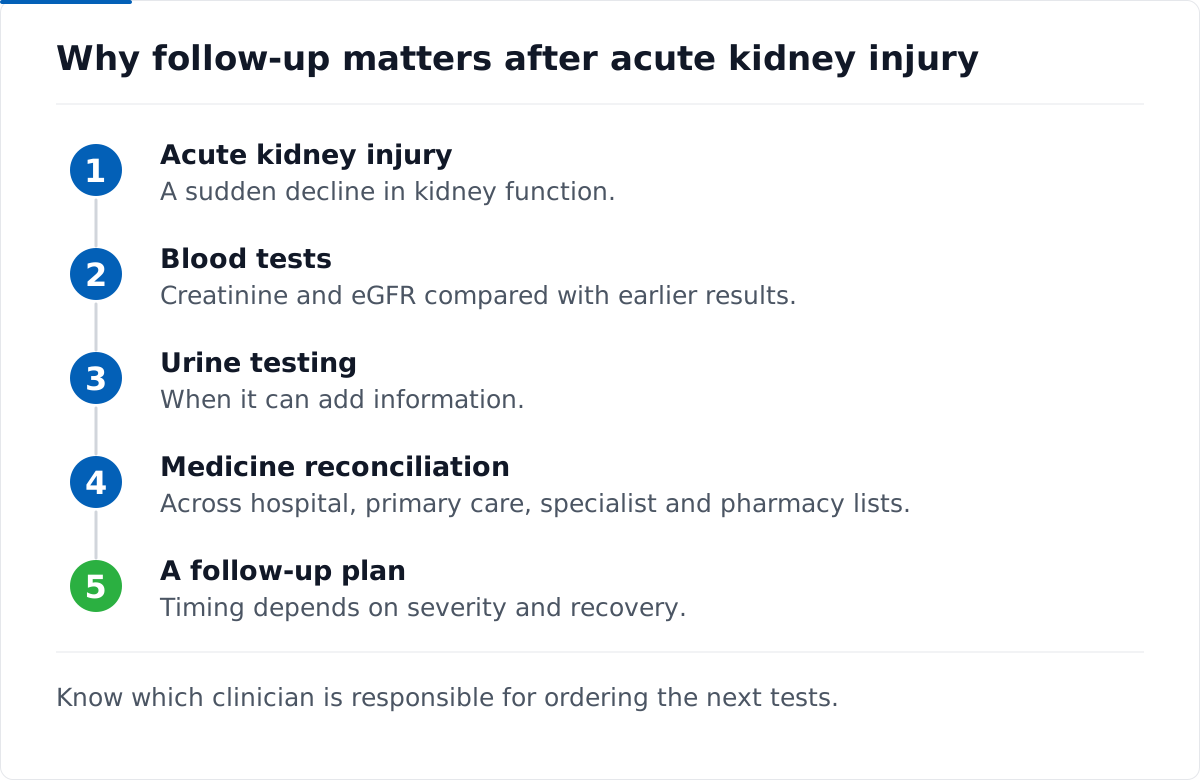
- Follow-up may include creatinine and eGFR trends, urine testing, medicine reconciliation, and review of the cause and recovery.
- The timing and type of follow-up depend on AKI severity, recovery, ongoing symptoms, and other health risks.
What follow-up after AKI is for
Acute kidney injury, or AKI, is a sudden decline in kidney function. It can happen during illness, infection, surgery, reduced circulation, urinary blockage, or exposure to something that affects the kidneys. Severity and recovery vary, so discharge from a hospital or urgent visit does not always end the kidney evaluation.[1]
Follow-up helps connect the acute event with what happens next. A clinician may compare creatinine and eGFR with earlier results, review urine findings, reconcile medicines and supplements, and look at blood pressure, symptoms, and the suspected cause. The goal is to understand the recovery pattern and plan appropriate monitoring, not to promise a particular outcome.
What may be reassessed
The follow-up plan depends on how severe the AKI was, whether dialysis or intensive care was needed, how kidney results changed before discharge, and whether CKD, diabetes, heart disease, or another risk is present. Some people need earlier reassessment than others. Do not postpone a clinician’s earlier plan because a general resource describes follow-up.
Possible parts of the conversation include:
-
Blood testing to compare kidney function with the hospital result and earlier baseline
-
Urine testing when it can add information about kidney damage or the cause
-
Medicine reconciliation across hospital, primary care, specialist, and pharmacy lists
-
Review of swelling, urine changes, appetite, breathing, blood pressure, and overall recovery
-
A decision about primary care, nephrology, or other specialist follow-up
Why longer-term monitoring may matter
KDIGO guidance recognizes that people who have had AKI should be evaluated for recovery and for new or worsening chronic kidney disease risk.[2] Even when kidney results improve, the event belongs in the medical history because it can help future clinicians understand risk during another illness or procedure.
Ask for the AKI diagnosis and important kidney results to be included in discharge records. Keep an updated medicine list and know which clinician is responsible for ordering the next tests. If you cannot obtain the planned testing or appointment, contact the discharging team or your regular clinician for guidance.
Medicines, fluids, and earlier care
Hospital medicine changes can be complex. Do not restart, withhold, or change a prescription based on an article. Ask the prescribing clinician or pharmacist to reconcile the discharge list and explain the plan. Fluid advice also depends on the cause of AKI, heart and liver health, swelling, urine output, and current recovery, so use the instructions from your care team.
If recovery is not going as expected or you notice a significant change from the discharge plan, contact the discharging team or the clinician responsible for follow-up promptly. Follow the hospital’s instructions for urgent or emergency symptoms rather than relying on this article.
The Kidney Experts serves Jackson, Dyersburg, Union City, Covington, and surrounding West Tennessee communities. Explore acute kidney injury care, clinic locations, and guidance on preparing for a kidney visit.
This article is educational information only. It does not predict recovery, direct medicine or fluid changes, diagnose CKD, or replace individualized medical advice from your clinician or nephrology team.
Questions to ask your care team
- What caused or contributed to the acute kidney injury?
- How close are my current kidney results to my earlier baseline?
- Will I need blood tests, urine tests, or nephrology follow-up?
- Which medicines and supplements should the prescribing team review after discharge?
- What changes should prompt an earlier call instead of waiting for the planned visit?