Key takeaways
- A referral should make the clinical question easy to identify: what the finding means for this patient, how it relates to earlier results, and what specialist input is needed.
- An eGFR should not be treated as a substitute for the urine findings; blood and urine testing answer different questions.
- Include the dates and values of relevant results rather than only a label such as “abnormal kidney function.”
- A routine referral form is not an emergency assessment; explain urgency through the appropriate clinical channel.
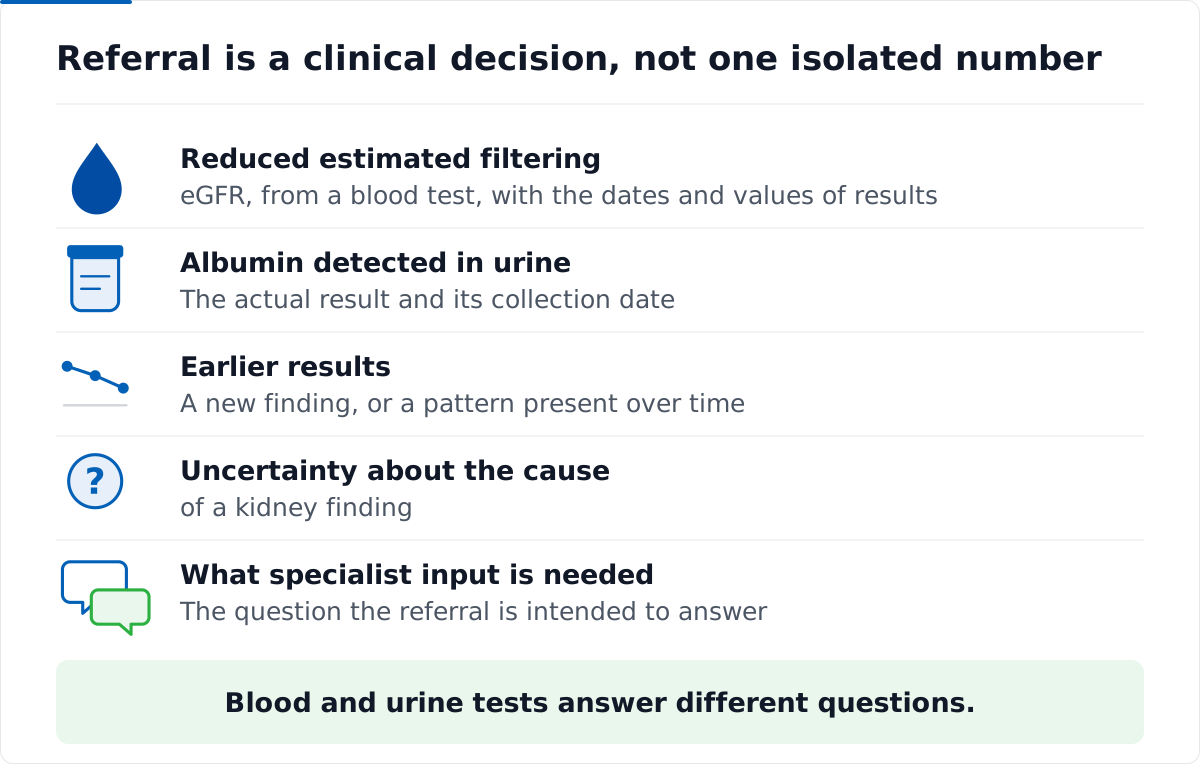
Referral is a clinical decision, not one isolated number
A nephrology referral can help clarify a kidney finding, assess an uncertain course, or coordinate ongoing care. The useful question is not simply whether a laboratory result is outside its reference range. It is what that finding means for this patient, how it relates to earlier results, and what specialist input is needed. A referral should make that question easy to identify.
The NIDDK overview describes blood testing to estimate kidney filtering and urine testing for albumin as complementary parts of kidney assessment.[1] They answer different questions. An estimated glomerular filtration rate, or eGFR, should not be treated as a substitute for the urine findings, and a referral based on one test should not imply that the other has already been evaluated.[2]
Describe the finding and the course
Useful referral questions may concern the interpretation of reduced estimated filtering, albumin detected in urine, or uncertainty about the cause of a kidney finding. The referring clinician should explain why the result matters in the patient’s clinical context rather than applying an unpublished website cutoff. This article does not define which findings mandate referral or how quickly an individual patient should be seen. Those decisions require physician review.
Include the dates and values of relevant results rather than only a label such as “abnormal kidney function.” Earlier measurements can help distinguish a new finding from a pattern that has been present over time. If earlier information is unavailable, say so. Missing history is different from a documented stable baseline, and a single measurement should not silently become a diagnosis of chronic kidney disease in the referral narrative.
Give the specialist enough context to answer
State the reason for referral in a short clinical summary. Include the available laboratory reports, relevant medical history, current medication list, and other records needed to understand the question. Where urine testing has been done, send the actual result and collection date. If a result is pending or a record cannot be obtained, identify the gap instead of delaying communication without explaining why the packet is incomplete.
The goal is not to send every record indiscriminately. It is to provide enough relevant information for a clinician to understand what has changed and what help is being requested. Use the practice’s approved secure referral process. Do not put patient-specific details in public website comments or general editorial feedback about this article.
Separate urgency from routine scheduling
A routine referral form is not an emergency assessment. If there is concern about an acute change or the patient’s immediate condition, the referring clinician needs to choose the appropriate clinical communication and care setting. This article cannot make that decision from a laboratory number, and it deliberately does not offer a threshold table or a waiting-time promise.
For practice logistics, the clinician referral page describes the current submission route. Explain urgency and the reason for it through the appropriate clinical channel rather than assuming an online form communicates everything. General contact information is available for coordination, not as a replacement for clinical triage.
Keep the patient informed
Tell the patient what question the referral is intended to answer and what information is still being gathered. A specialist appointment does not by itself establish a diagnosis or predict a particular treatment. The existing when-to-see-a-nephrologist article and CKD service page provide additional practice context. Referral decisions remain individualized; this article is educational, not a substitute for professional assessment or a complete referral guideline.
Questions to ask your care team
- What does this finding mean for this patient, and how does it relate to earlier results?
- What specialist input is needed?
- Where urine testing has been done, is the actual result and collection date included?
- If a result is pending or a record cannot be obtained, is the gap identified?
- Does the patient know what question the referral is intended to answer?